National & International Conference Presentations
EDUCAUSE Member QuickTalk | December 2023
Member QuickTalk | Drafting an Institutional AI Policy

EDUCAUSE QuickTalk participant on December 8th discussing institutional AI Policy and helping to lead a collaborative group activity discussing a potential policy design framework that includes: various questions that are effective in guiding meaningful discussions, achieving a balanced representation of perspectives within an organization, developing plans to assist stakeholders in embracing these policies, and the agility and adaptability required to stay abreast of the swift advancements in AI technology.
LinkedIn Live Round table Talk | November 2023
Harvesting the Potential of AI in Your Classroom
Sponsored by IDLance.
Sat at the virtual table for a live discussion about AI’s impact on Instructional Design. Artificial intelligence (AI) in instructional design was chosen for IDLance’s first Round Table Talk because it is revolutionizing our industry. Joined by a group of instructional designers and learning and development professionals, we aimed to focus the discussion on emerging AI trends, current challenges, and the balance of using GenAI within the L&D field.
Symposium on AI | November 2023
Harvesting the Potential of AI in Your Classroom
Sponsored by the Center for Advancement of Faculty Excellence at California State Polytechnic University, Pomona.

November 2023 | Pomona, CA
Presented at Cal Poly Pomona’s first “Symposium on AI in the Classroom and Beyond,” hosted by the Center for the Advancement of Faculty Excellence. My talk aimed to blend the warmth of your favorite latte with the cool power of AI, offering a delightful session that explored how to make the classroom as refreshing as a brisk autumn morning. Together, we embarked on a journey that was as invigorating as a walk through a park blanketed in colorful autumn leaves, where every sip of knowledge is as satisfying as your favorite seasonal latte. Following the session, I crafted this asynchronous recording, enlisting the help of a voice-cloned AI to narrate the content.
ASCO CAO | October 2023
AI 101 for Academic Leaders
Sponsored by the Association of Schools and Colleges of Optometry (ASCO) Chief Academic Officers (CAO) group
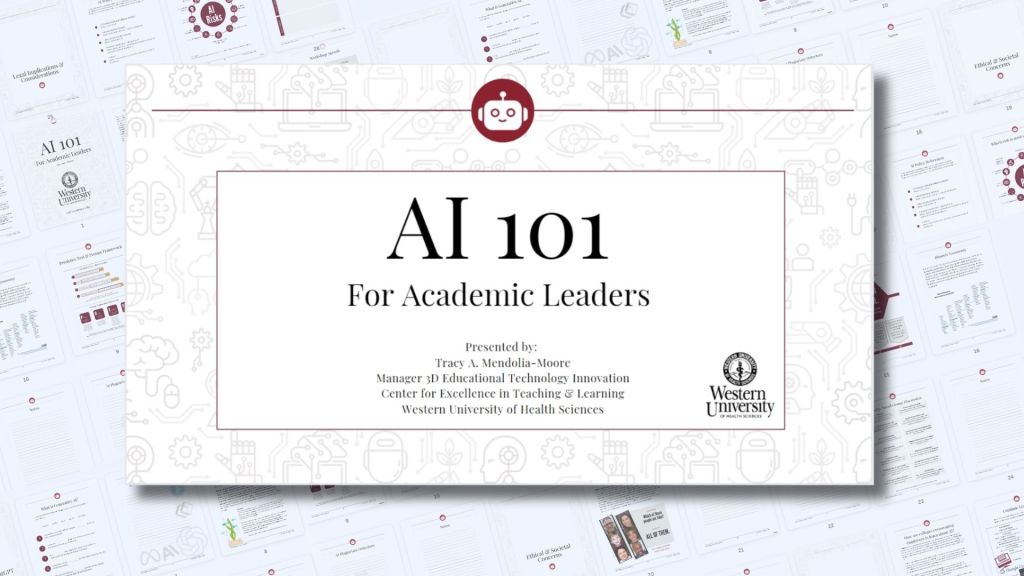
In October’s “AI 101 for Academic Leaders” presentation, university leaders were immersed in a concise yet comprehensive exploration of generative AI, with a particular focus on platforms like ChatGPT. Within this 2-hour session, participants grasped the fundamentals of AI operation and architecture, contemplated AI’s classroom applications, and addressed academic integrity challenges. A collaborative effort led to the initial drafting of key points for AI university policies, encompassing ethical use and data privacy. The training concluded with rich discussions on AI’s long-term educational impact, leaving leaders equipped with the insights and strategic foresight necessary to navigate and shape the future of AI in academia.
AACP | September 2023
Unlocking the Future of Education: 4X4 Ways ChatGPT and Other Artificial Intelligence Tools Can Transform the Classroom Experience
Sponsored by the American Association of Colleges of Pharmacy (AACP) Drug Information and Library Science Section the Social and Administrative Sciences Section
AACP Online Presentation & CE Opportunity
This Continuing Education (CE) webinar explored the innovative ways ChatGPT and other artificial intelligence tools can be used in the classroom. Insightful discussions guided the target audience of pharmacists and pharmacy educators through the 4 ways ChatGPT can be used in the classroom, 4 ways to minimize cheating with AI tools, 4 ways ChatGPT and other AI tools can be used to assist faculty, and 4 ways students can use ChatGPT as a study tool. The active learning session included an interactive Padlet board to increase backchannel learning opportunities among the 200+ live attendees. The recorded session can be purchased online through the AACP website and is available to view asynchronously with a quiz to earn CE credit for the training.
EDUCAUSE ELI | June 2023
Ready, (Head)Set, Go! Virtual Reality Immersive Simulation for Interprofessional Education
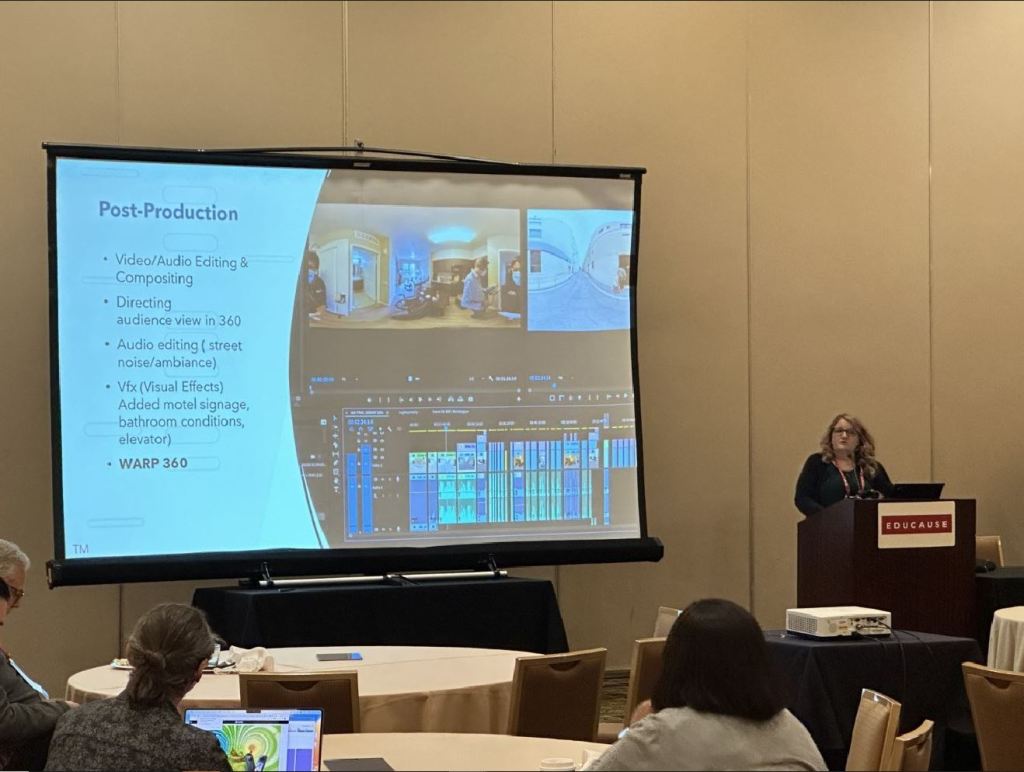
June 2023 | Anaheim, CA
Virtual reality–based immersive simulation (VRIS) can provide students with quality IPE experiences while overcoming the barriers of time, place, and other logistics constraints. Participants will get an opportunity to experience a VRIS-based interprofessional experience created by an interprofessional research team at WesternU. They will also participate in interprofessional teams creating VR-based simulation scenarios and recognize the logistics, time, cost, and other issues to implement the same at their institutions and educational programs.
EDUCAUSE ELI | June 2023
Leveraging the EDUCAUSE Digital Learning Strategy Framework at Your Institution
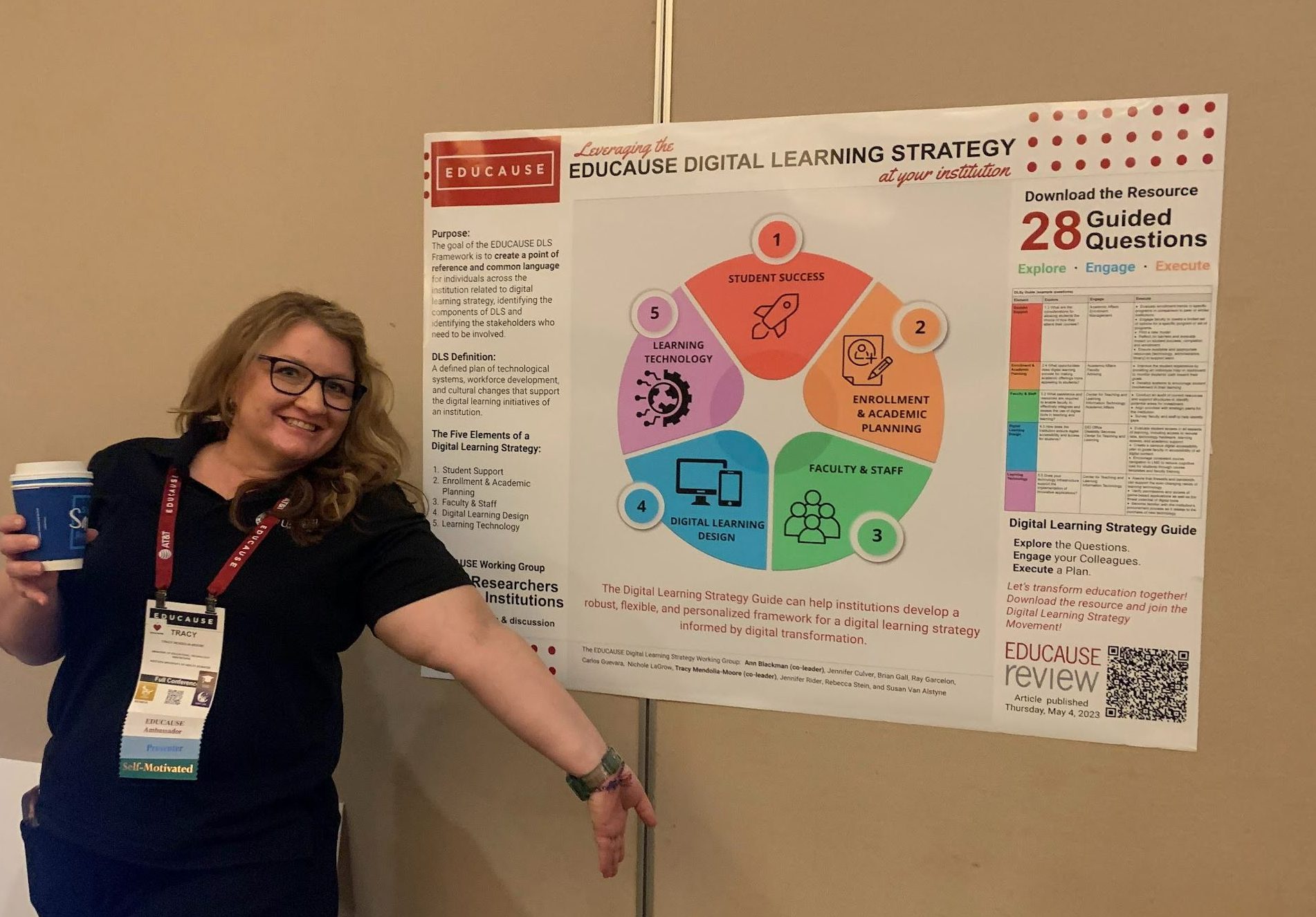
June 2023 | Anaheim, CA
Learn about the newly published EDUCAUSE Digital Learning Strategy (DLS) Framework and the resources available to assist institutions in this critical aspect of the evolution of digital transformation. The purpose of the EDUCAUSE DLS Framework is to create a point of reference and common language for individuals across the institution related to digital learning strategy, identifying the components of DLS and identifying the stakeholders who need to be involved. In addition to providing an overview to EDUCAUSE DLS resources, this facilitated discussion will actively engage participants in a starting point to establish a process to create and review DLS practices at their own institutions. Opportunities will be shared to continue the conversation, build a network, and participate in future work that goes deeper into each component that might turn into a toolkit.
iLRN: Immersive Learning Research Network | May 2023
Empathetic Chatbot: Enhancing Medical Education with Artificial Intelligence

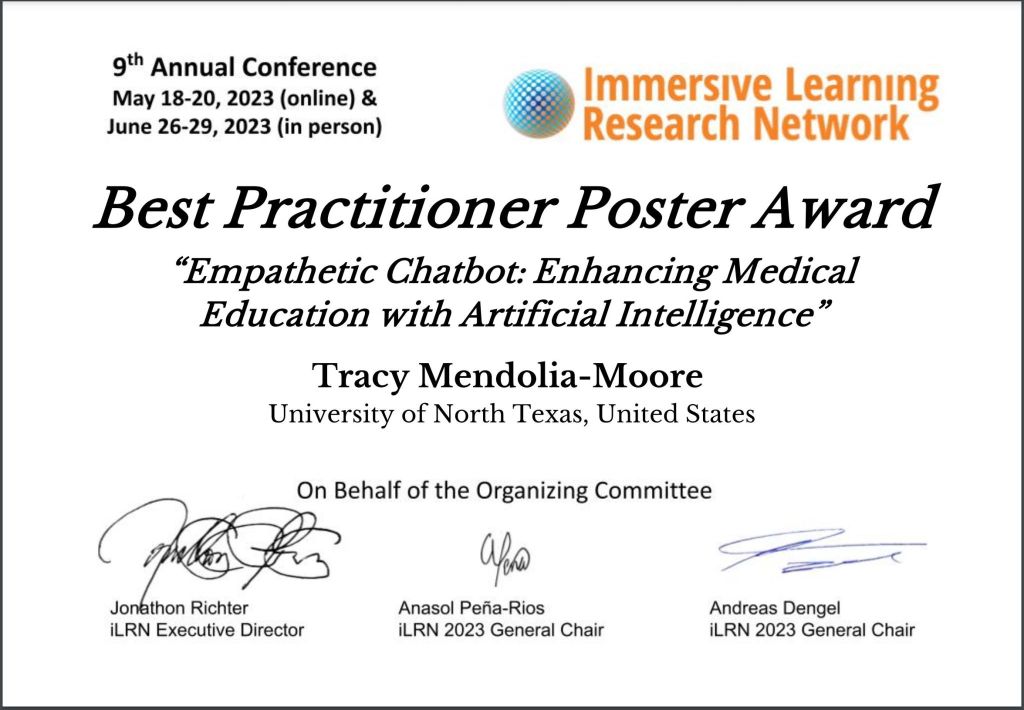
This article discusses the development of a chatbot that is designed to assist medical students in practicing empathetic communication skills with simulated patients. Empathy is critical in clinical outcomes and can improve the provider-patient relationship. The chatbot provides personalized learning support to students and is created using an artificial intelligence (AI) intent framework, with a natural language processor (NLP) interface and uses a Dialogflow intent process framework. Additionally, the article considers the cost-saving benefits of incorporating chatbots in medical education as a potential cost benefit to standardized patient scenarios. Finally, it summarizes the studies that have demonstrated the effectiveness of chatbots as a learning tool and underscore their potential to enhance the learning process in medical education.
iLrn: Immersive Learning Research Network | May 2023
The Role of Virtual Reality in Distance Learning: An Examination of the Efficacy on Student Learning Outcomes, Social Presence, and Collaborative Learning.

This article discusses the potential of virtual reality (VR) as a tool for enhancing student learning outcomes in distance education. The author explores whether integrating VR technology into digital learning environments can increase social presence, experiential and communal learning, and overall student learning outcomes. The paper offers a review of the literature on VR, distance learning, social presence, practical application, and learning outcomes. While VR has the potential to enhance the educational experience, its implementation in higher education has been slow, largely due to funding constraints and instructor resistance. However, with affordable hardware options like the Meta Quest headset, VR adoption in higher education is becoming increasingly accessible. Furthermore, research shows that VR can aid in achieving higher levels of Bloom’s Taxonomy, as well as fostering self-directed learning and experiential discovery. The author concludes that while integrating VR into online education comes with certain challenges, such as training, technical support, and investing in infrastructure, the technology’s potential for facilitating better learning outcomes makes it a promising tool for the future of distance education.
Cal Poly Pomona, CAFE | May 2023
Cross-collaboration presentation given a Cal Poly Pomona to share and discuss how generative AI can be used to assist faculty, and help to enhance student learning; as well as sharing projects and research ideas for using generative AI in higher education

Professional Staff Presentation
Presented at Cal Poly Pomona
Invited by the Center for the Advancement of Faculty Excellence at Cal Poly Pomona to lead a presentation and discussion about the projects, education, and research currently being conducted within the Center for Excellence in Teaching & Learning at Western University of Health Sciences. During this presentation, I shared how our team at WesternU is embracing ChatGPT and Generative AI as a tool to assist faculty and students in the teaching and learning process. I also shared current projects that are in development that utilize generative AI, as well as future research being conducted with faculty.
Professor for a Day, Cal Poly Pomona | March 2023
Invited back to the Cal Poly Pomona campus to present on my career journey and discuss my experience with artificial intelligence in the teaching & learning space.
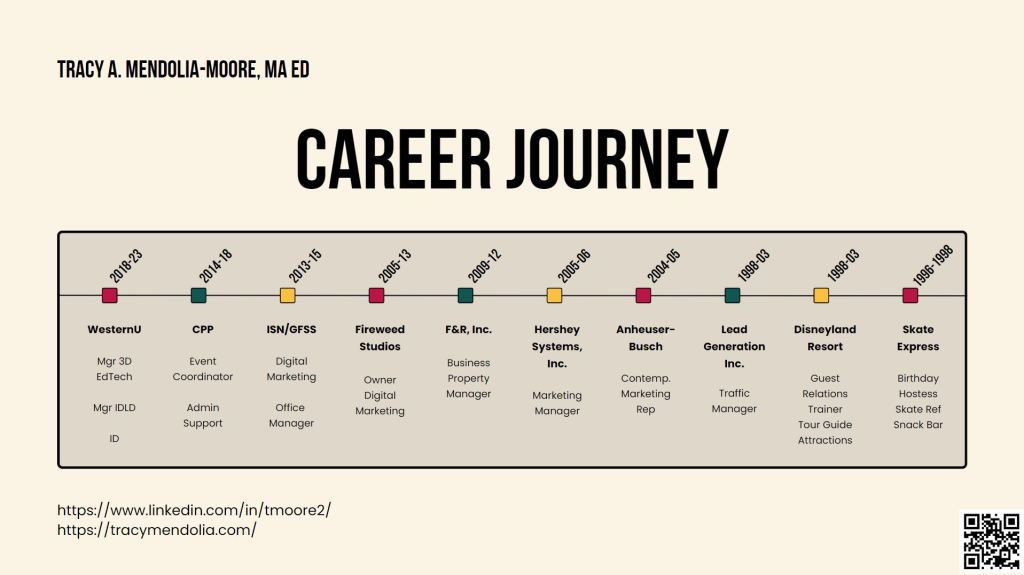
Professor for a Day
Graduate Course: Artificial Intelligence
Cal Poly Pomona’s Alumni Professor for a Day Program has provided a unique experience for alumni and students. Alumni are invited back to campus to meet with students for mentoring on career path choices, and graduate school possibilities, or even to teach a class for a day.
One of this program’s goals is to provide students with an opportunity to interact with alumni and learn first-hand how their education applies to the real world. Alumni are asked to share their experiences in regard to their career path and profession.”
Association of Medical Educators of Europe | August 2022
POSTER – Microlearning and the Effectiveness of eLearning Instructional Aides compared to Recorded Classroom Lectures
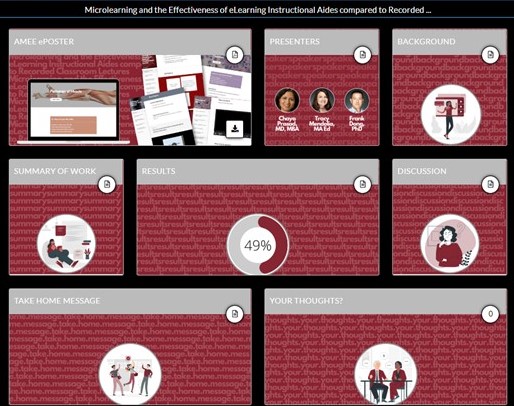
Co-Author, Poster Designer
Presented in Lyon, France
This project began as a research project with the faculty member to identify if implementing an eLearning module (Instructional Aide/IA), segmented into microlearning chunks, will increase student-perceived learning effectiveness, appeal, and general satisfaction versus that of archived recorded video lectures. Of the 305 students surveyed 49% stated that they would prefer future lectures to be structured in a microlearning and chunked chapter content format, and 32% of students agreed they felt more engaged with the chunked chapter content format
American College of Clinical Pharmacy | July 2022
POSTER – Comparing Paper-Based Cases with Interactive E-Learning Cases in a Second Year Pharmacy Therapeutic Liver Course

Co-Author, Poster Designer
This project began as a research project with the faculty member to evaluate student-perceived effectiveness, appeal, efficiency, and general student satisfaction of an eLearning module versus that of the traditional paper-based case scenarios. 97% of students surveyed agreed that there were more motivated to learn from the eLearning module. The research data was given to a doctoral student to complete the statistical analysis and prepare for a conference presentation. I provided feedback and poster design assistance to the student throughout the process.
American Physical Therapy Association | February 2022
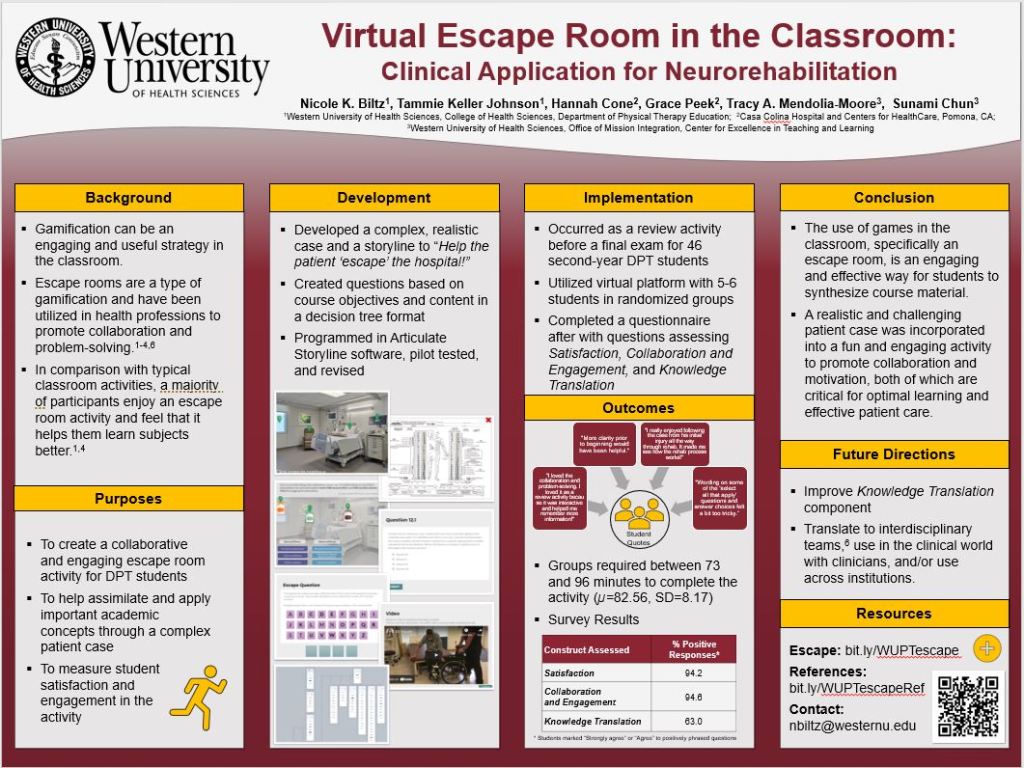
POSTER – Virtual Escape Room in the Classroom: Clinical Application for Neurorehabilitation
Co-Author, Poster Designer
This was a project I developed for the Physical Therapy faculty at WesternU. The goal was to take a patient case study and convert it into an interactive “Escape Room.” The student was required to navigate the Articulate Storyline module I designed and collect letters that ultimately are needed to make an “escape word.” This interactive case took students 60-90 minutes to complete in small groups and received a 94% positive response rate from the learners.
Serious Play Online | June 2021
Simulated Case-Based Learning, COVID-Style
Virbela VR Conference
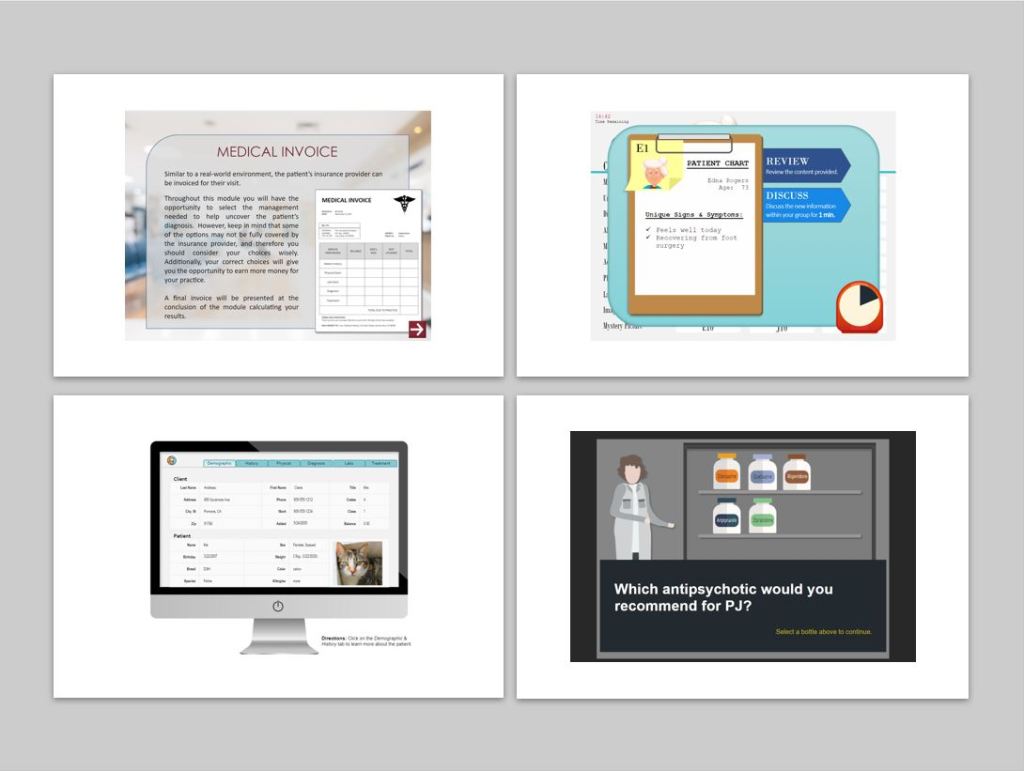
Without a doubt, the pandemic pushed education outside of its comfort zone. Universities adopted new technologies and reinvented what it means to be a remote student. This urgent pivot to online learning allowed for the development of new and innovative teaching and learning avenues. Case-based Learning is a common method of teaching within medical education, yet how faculty envision the case information and deployment of that content varies by instructor. In this session we will take a look at a variety of digital CBL modules that were created during the pandemic, each unique to the vision of the instructor and case content.
With Articulate Storyline designers begin with a blank canvas, but the program possibilities are endless.
iLRN – Immersive Learning Research Network | May 2021
Ready Player One…Ready Player Now

Virbela VR Conference – Poster Session Recording
This Pecha Kucha will draw connections between the popular science-fiction novel, Ready Player One and the current possibilities of mixed reality. Ready Player One is a science-fiction adventure novel centered in the immersive virtual reality world called The OASIS. The story takes place in the year 2045, in a world where society has transitioned to a digital environment. This Pecha Kucha will identify how the novel’s Sci-Fi fabrications are not too far off from the current mixed reality technologies and possibilities. This thought-provoking presentation will aim to intrigue the audience with content while providing some light-hearted entertainment.
OLC Innovate | March 2021
Based on Bandersnatch: Designing a “Choose Your Own Adventure” eLearning Module

Innovation Studio Design Thinking Challenge
Emmy award-winning Black Mirror: Bandersnatch was Netflix’s first interactive movie that allowed the viewer to choose the movie’s storyline. Designed in Articulate Storyline and similar to Bandersnatch, this case-based eLearning module allows the student to choose their own learning path. In this session, we will review the eLearning module and discuss the design process while providing technology tips and tricks for developing multifaceted branching scenarios, triggers and layers.
*Session sponsored by Walden University.
EDUCAUSE ELI | March 2020
AR Physical Examination of 4-Legged Patient
CONFERENCE CANCELED DUE TO COVID-19
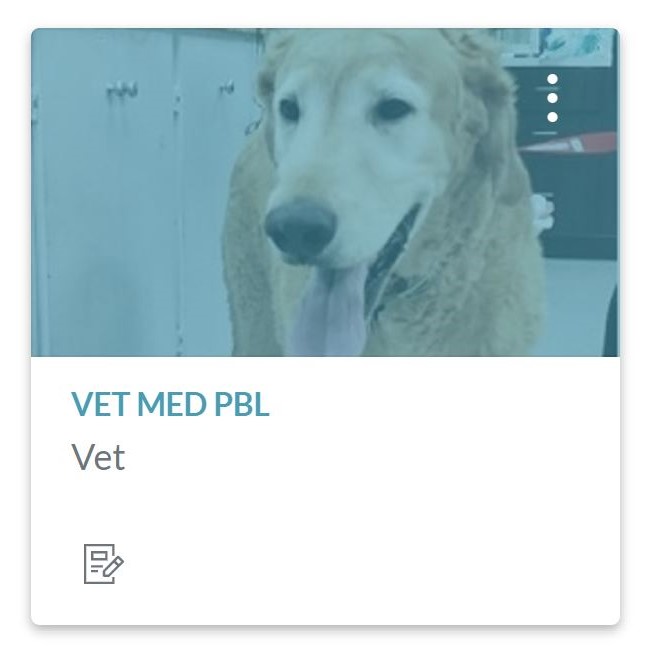
Henry is a 7-year old golden retriever who came into the vet’s office for a check-up…well, Henry is not exactly a real Golden Retriever. Henry is an augmented reality (AR) canine asset that is incorporated into the Vet Med program The Doctor of Veterinary Medicine (DVM) program at Western University of Health Sciences uses a problem-based learning (PBL) curriculum for the first 2 years of instruction. AR-Henry simulated the patient’s physical examination component outlined within the PBL curriculum. Prior to the development of AR-Henry, students were simply given a printed list of patient vitals. With the use of augmented reality, content delivery has been reimagined into an active learning space. Now, PBL student groups don a Microsoft HoloLens to uncover pertinent information. Using AR triggers and hotspots, students can identify Henry’s temperature and heart rate, observe his attitude, check the cleanliness of his ears and teeth, and so much more
LHMS Career Day | February 2020
LHMS Career Day: Using Gamified VR apps for education

2019 Lone Hill Middle School Career Day
This was a Career Day presentation I did for my daughter’s middle school where I visited various classes throughout the day and shared how virtual reality (VR) can be used in an educational setting. With many young kids wanting to be YouTubers or Gamers, the school teachers and counselors were extremely excited to have me come share how VR games and cutting-edge technology tools can be used to create apps for learning.
So, maybe this wasn’t a national conference, but it was one of the best events that I was invited to present at!
OLC Accelerate | November 2019
PBL Gamechanger: Utilizing Gamification and Case-Based Learning in Articulate Storyline for Medical Education
This session will introduce you to a PBL game-changing format utilizing Articulate Storyline. Standard written medical cases studies were transitioned into e-modules allowing for better assessment of the student’s critical thinking and decision-making skills through case selection interactions. At the conclusion of the case a medical invoice is generated which determines if the student made cost-effective decisions for the clinic.
EDUCAUSE ELI | April 2019
Reimagining College Campus Tours with XR
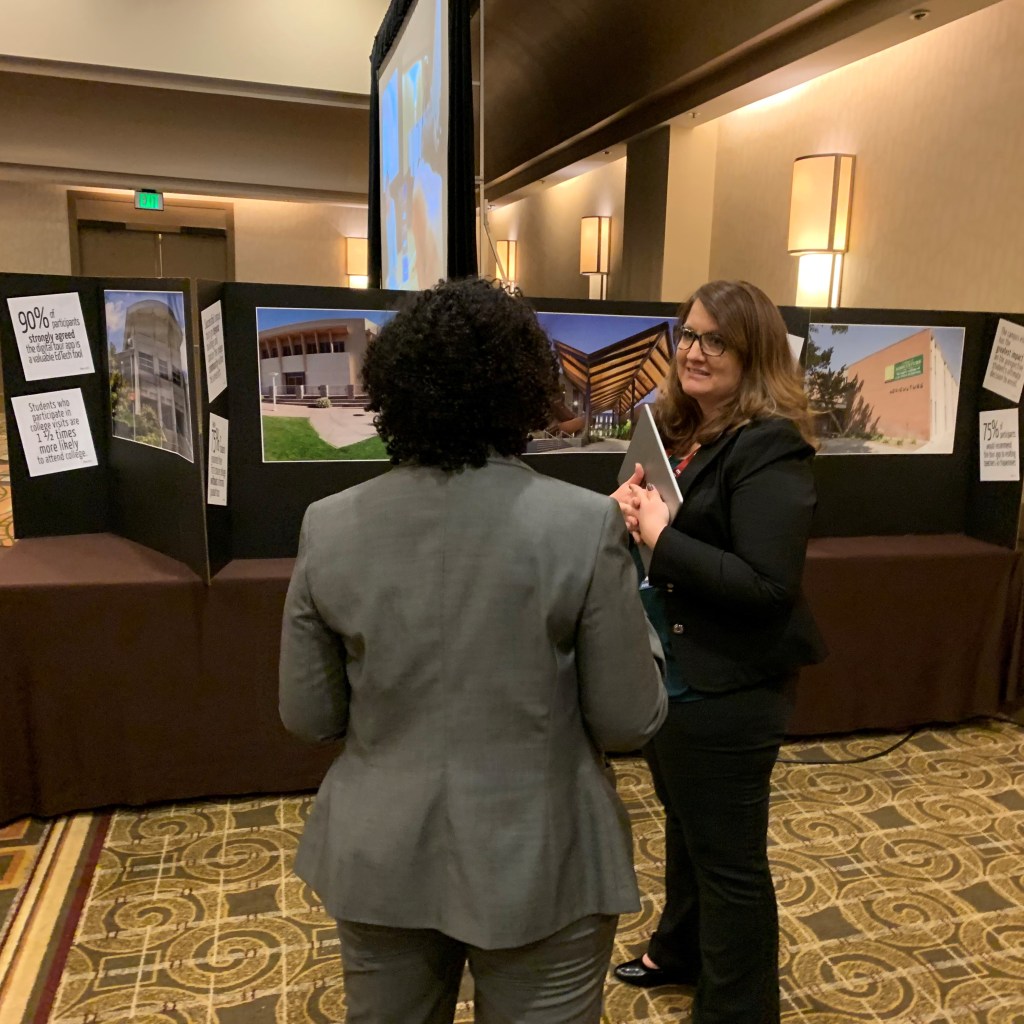
College campus tours are a top recruiting tool, yet research shows that nearly 75% of prospective students conduct a self-guided tour. In February of 2019, I was invited to demo my mixed-reality concept and research for college campus tours, sharing how mobile apps, including augmented reality (AR), can reach students by transforming the campus tour experience.